
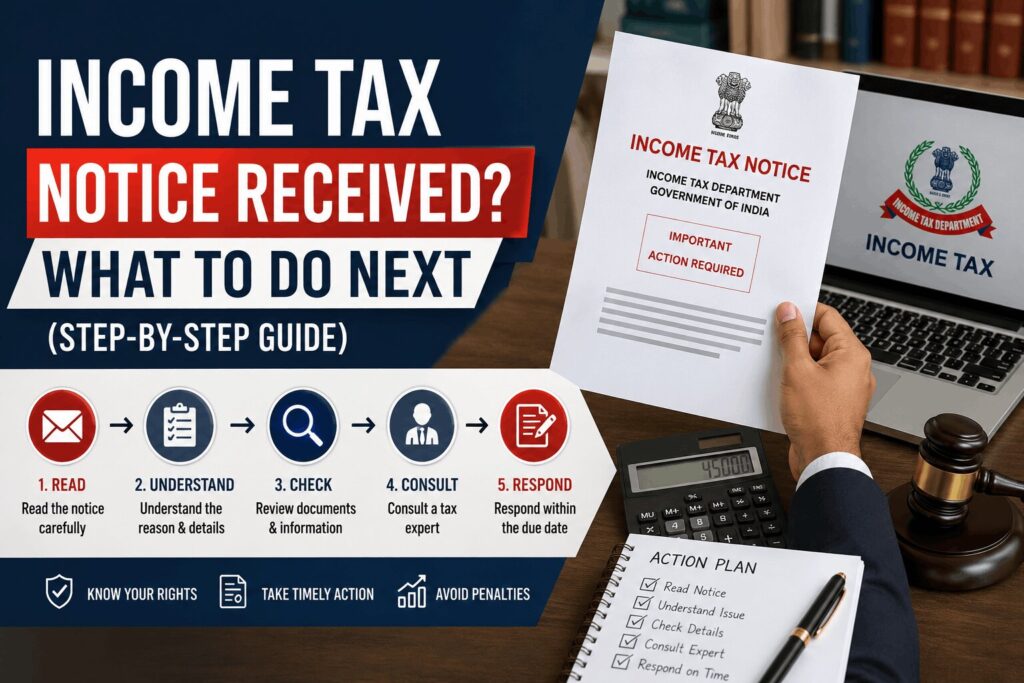
Income Tax Notice Received? What to Do Next (Step-by-Step Guide)
Receiving an income tax notice can be stressful, especially if it’s your first time. Many taxpayers immediately assume that receiving a notice means they have violated tax laws or are facing legal action. However, this is not always the case. The Income Tax Department may issue notices for various reasons, including verification of information, requests for additional documents, discrepancies in tax returns, or clarification of financial transactions.
The most important thing to remember is not to panic or ignore the notice. Every income tax notice has a specific purpose, and responding appropriately within the prescribed time is essential. Understanding why the notice was issued and taking the correct steps can help resolve the matter efficiently while avoiding unnecessary penalties or further legal complications.
At Azad Khan Advocate, we assist individuals, professionals, and businesses in understanding their legal rights and navigating tax-related matters. Timely legal guidance can help ensure that income tax notices are handled correctly and in accordance with applicable laws.
What Is an Income Tax Notice?
An income tax notice is an official communication issued by the Income Tax Department requesting information, clarification, supporting documents, or compliance with certain legal requirements.
Receiving a notice does not automatically mean that you have committed tax fraud or made a serious mistake. In many cases, notices are generated as part of routine verification or assessment procedures.
An income tax notice may relate to:
- Verification of your Income Tax Return (ITR)
- Mismatch between reported income and department records
- High-value financial transactions
- Pending tax payments
- Requests for additional documents
- Scrutiny assessments
- Non-filing of income tax returns
- Technical errors in the return
The key is to carefully review the notice before taking any action.
Common Reasons for Receiving an Income Tax Notice
Understanding why you received the notice is the first step toward resolving the issue.
Some common reasons include:
Mismatch in Income Details
The income declared in your Income Tax Return may differ from the information available with the Income Tax Department through employers, banks, financial institutions, or other reporting entities.
High-Value Transactions
Large financial transactions such as property purchases, significant cash deposits, foreign remittances, or substantial investments may trigger verification by the tax authorities.
Incorrect Information in the Return
Simple errors such as incorrect bank details, PAN information, deductions, exemptions, or tax calculations may result in a notice requesting clarification.
Failure to File an Income Tax Return
If you were required to file an Income Tax Return but failed to do so within the prescribed period, the department may issue a notice seeking compliance.
Selection for Scrutiny Assessment
Some returns are selected for detailed scrutiny to verify the accuracy of the information provided. This does not necessarily indicate wrongdoing but requires proper documentation and timely responses.
Step 1: Read the Notice Carefully
The first and most important step is to read the notice thoroughly before responding.
Pay attention to:
- The section of the Income-tax Act under which the notice has been issued
- The reason for the notice
- The assessment year involved
- The response deadline
- Any documents requested by the department
Avoid making assumptions based solely on the title of the notice. Understanding its contents will help you determine the appropriate course of action.
Step 2: Verify That the Notice Is Genuine
Before taking any further action, verify that the notice has been issued by the Income Tax Department.
You can generally verify notices through the official Income Tax portal using the document identification number and other details mentioned in the communication.
Verification helps protect taxpayers from responding to fraudulent or fake notices.
Step 3: Understand the Applicable Legal Section
Every income tax notice is issued under a specific legal provision of the Income-tax Act, and each section serves a different purpose.
For example, a notice may relate to:
- Filing compliance
- Scrutiny assessment
- Reassessment proceedings
- Information verification
- Demand for tax payment
Understanding the legal basis of the notice helps determine what information or documents need to be submitted and whether professional legal guidance may be beneficial.
Step 4: Gather the Required Documents
Once you understand the purpose of the notice, collect all relevant documents before preparing your response.
Depending on the issue, these may include:
- Income Tax Returns
- Form 16
- Bank statements
- Investment proofs
- Salary records
- Property documents
- Business financial records
- Tax payment receipts
- Previous correspondence with the department
Organized documentation makes it easier to respond accurately and reduces the possibility of further queries from the tax authorities.
Step 5: Respond Within the Prescribed Deadline
Every income tax notice specifies a deadline for submitting your response or providing the required documents. Missing this deadline can lead to additional scrutiny, penalties, or further legal proceedings, depending on the nature of the notice.
Before submitting your response:
- Review all requested information carefully.
- Ensure that supporting documents are complete and accurate.
- Verify that the information matches your financial records.
- Keep copies of all documents submitted.
Responding within the prescribed time demonstrates compliance and helps avoid unnecessary complications.
Step 6: Review Your Response Before Submission
Many taxpayers make the mistake of responding too quickly without reviewing their documents. Even minor errors or missing information may result in additional notices.
Before submitting your response, make sure that:
- All required documents have been attached.
- Financial figures are accurate.
- Personal details are correct.
- Supporting evidence matches the information provided.
- The response clearly addresses the issues mentioned in the notice.
Taking a little extra time to review your submission can help prevent future disputes with the tax authorities.
Step 7: Know When to Seek Professional Legal Assistance
Not every income tax notice requires complex legal representation. However, certain situations involve legal or procedural issues where professional guidance can be valuable.
You should consider consulting a legal professional if:
- The notice involves a scrutiny assessment.
- Significant tax demands have been raised.
- You disagree with the department’s findings.
- The matter relates to business taxation.
- Multiple notices have been received.
- The case involves penalties or prosecution.
- You are unsure how to prepare your response.
If you require legal guidance on tax assessments, disputes, or compliance matters, our Tax Legal Advocate in Allahabad service provides legal assistance for individuals and businesses dealing with tax-related issues.
Common Mistakes to Avoid After Receiving an Income Tax Notice
Many tax-related problems arise because taxpayers react without fully understanding the notice.
Avoid these common mistakes:
Ignoring the Notice
Ignoring an official notice may lead to additional legal consequences. Always review and respond within the prescribed timeline.
Providing Incorrect Information
Submitting inaccurate or incomplete information can delay the assessment process and may result in further notices.
Missing the Response Deadline
Failure to respond on time may attract penalties or additional proceedings.
Submitting Incomplete Documents
Ensure that all requested documents are attached and clearly organized before submission.
Panicking Without Understanding the Notice
Receiving a notice does not automatically indicate tax evasion or wrongdoing. Many notices are issued for routine verification or clarification.
Tips to Handle an Income Tax Notice Effectively
Following a systematic approach can make the process much easier.
Some practical tips include:
- Read the notice carefully before taking action.
- Verify the authenticity of the notice.
- Understand the applicable legal provision.
- Keep all financial records organized.
- Respond within the prescribed timeline.
- Preserve copies of all communications.
- Seek professional advice when necessary.
Being proactive helps reduce stress and improves the likelihood of resolving the matter efficiently.
Why Choose Azad Khan Advocate?
Income tax matters often involve detailed documentation, legal procedures, and strict compliance requirements. At Azad Khan Advocate, we understand the importance of protecting our clients’ legal rights while helping them respond appropriately to tax-related issues.
We assist clients with:
- Tax-related legal consultation
- Income tax notices
- Tax dispute resolution
- Assessment-related matters
- Financial and tax documentation guidance
- Representation in applicable legal proceedings
Our approach focuses on providing practical legal advice tailored to the facts of each case while ensuring transparency and professional support throughout the process.
Conclusion
Receiving an income tax notice should not be a cause for panic. In many cases, it is simply a request for clarification or additional information. The key is to understand the reason behind the notice, review it carefully, gather the required documents, and respond within the prescribed deadline.
Seeking timely legal guidance, especially in complex tax matters, can help you understand your rights, comply with legal requirements, and avoid unnecessary complications.
At Azad Khan Advocate, we are committed to helping individuals and businesses navigate tax-related legal matters with confidence and professionalism.
Frequently Asked Questions
Q1. Does receiving an income tax notice mean I have done something wrong?
No. Many notices are issued for routine verification, clarification, or assessment purposes and do not necessarily indicate any legal violation.
Q2. Should I ignore an income tax notice if I believe it was sent by mistake?
No. Every notice should be reviewed carefully, and appropriate action should be taken within the prescribed timeline.
Q3. How can I verify whether an income tax notice is genuine?
You can verify the notice using the official Income Tax portal by checking the document identification number and other details provided in the communication.
Q4. What documents may be required while responding to a notice?
Depending on the issue, you may need Income Tax Returns, Form 16, bank statements, investment proofs, financial records, property documents, and tax payment receipts.
Q5. What happens if I miss the response deadline?
Missing the deadline may result in further legal proceedings, additional scrutiny, or penalties depending on the circumstances of the case.
Q6. Can I respond to an income tax notice myself?
In straightforward cases, taxpayers may be able to respond independently. However, complex matters often require professional legal or tax advice.
Q7. When should I consult a tax legal advocate?
You should seek professional assistance if the notice involves scrutiny assessments, significant tax demands, penalties, disputes, or complex legal issues.
Q8. How can Azad Khan Advocate help with income tax matters?
Azad Khan Advocate provides legal consultation, guidance on income tax notices, tax dispute resolution, assessment-related matters, and support for individuals and businesses dealing with tax-related legal issues.