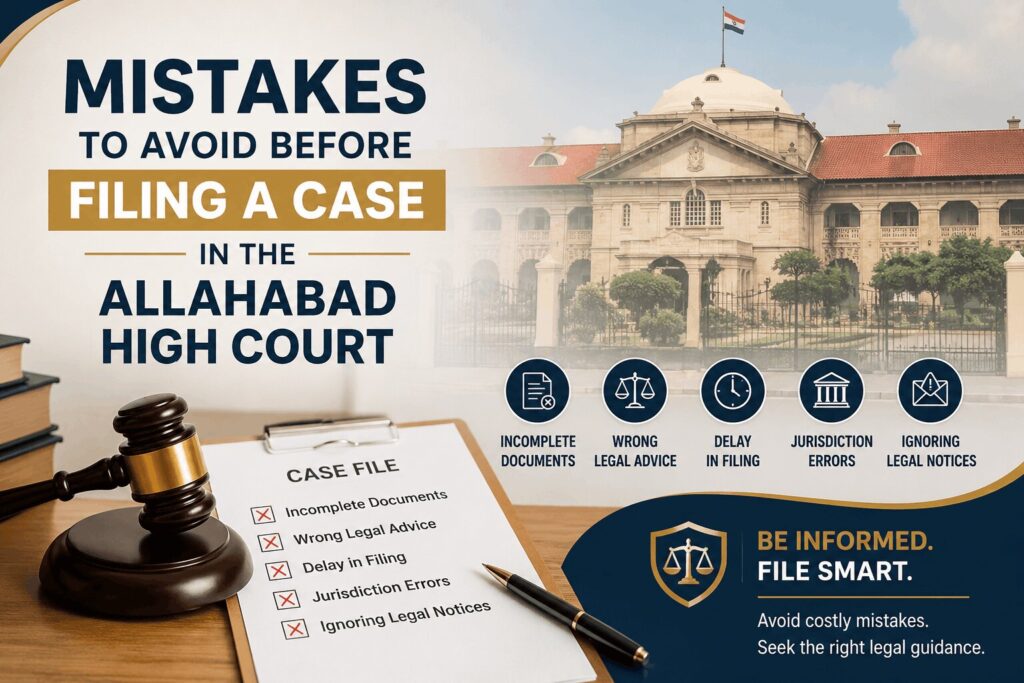
Mistakes to Avoid Before Filing a Case in the Allahabad High Court
Filing a case in the Allahabad High Court is a significant legal step that requires careful planning, proper documentation, and a clear understanding of the legal process. Whether your matter involves a criminal case, civil dispute, property conflict, constitutional issue, or any other legal matter, avoiding common mistakes can save valuable time, reduce unnecessary expenses, and strengthen your case from the very beginning.
Many first-time litigants approach the High Court without fully understanding the legal requirements. Missing documents, delayed legal action, choosing the wrong legal remedy, or failing to seek professional advice can negatively affect the outcome of a case.
At Azad Khan Advocate, we regularly assist individuals and businesses in preparing and presenting their cases before the Allahabad High Court. With the right legal guidance and preparation, clients can approach the legal process with greater confidence.
Why Proper Preparation Matters Before Filing a Case
Every legal case is unique, and no two disputes follow the exact same path. Before approaching the High Court, it is important to understand the nature of your legal issue, gather supporting documents, and identify the most appropriate legal remedy.
Many legal matters become more complicated because of avoidable mistakes made before the case is even filed. Proper preparation not only strengthens your case but also helps reduce procedural delays and unnecessary legal expenses.
If this is your first time approaching the High Court, understanding the Allahabad High Court legal process can help you know what to expect at every stage of the proceedings.
Mistake 1: Waiting Too Long to Seek Legal Advice
One of the biggest mistakes people make is delaying legal consultation. Many individuals hope disputes will resolve on their own or wait until they receive legal notices before consulting an advocate.
Unfortunately, delaying legal advice may result in:
- Loss of important evidence
- Missed legal deadlines
- Weak documentation
- Limited legal remedies
- Increased litigation costs
Consulting an advocate at an early stage allows you to understand your legal rights, evaluate your options, and prepare an effective legal strategy before the matter becomes more complex.
Mistake 2: Filing the Wrong Type of Case
Many first-time clients are unsure whether their legal issue falls under civil law or criminal law. Filing the wrong type of case can delay proceedings and create avoidable complications.
For example:
- Property ownership disputes are generally civil matters.
- Contract disputes are civil matters.
- Theft, assault, cheating, and similar offences are criminal matters.
- Some disputes, such as property fraud or criminal breach of trust, may involve both civil and criminal proceedings.
Before initiating legal action, it is helpful to understand the difference between civil and criminal cases so that the appropriate legal remedy can be pursued.
Mistake 3: Failing to Organize Important Documents
Documentation plays a crucial role in every legal proceeding. Missing or incomplete records can weaken your case and delay court proceedings.
Depending on the nature of the dispute, you may need:
- Identity proof
- Property documents
- Agreements and contracts
- FIR or police records
- Court orders
- Financial records
- Revenue documents
- Legal notices
- Correspondence between parties
Maintaining complete and organized records enables your advocate to prepare a stronger case supported by relevant evidence.
Mistake 4: Ignoring Legal Notices
Receiving a legal notice can be stressful, but ignoring it is rarely the right decision.
Many individuals assume that avoiding a legal notice will prevent litigation. In reality, failing to respond appropriately may weaken your legal position and make resolving the dispute more difficult.
Instead of ignoring a notice, consult an advocate who can review the contents, explain your legal rights, and prepare an appropriate response if required.
Mistake 5: Choosing an Advocate Without Relevant Experience
Not every lawyer handles every type of legal matter. Choosing legal representation solely based on cost or convenience can affect the quality of your case preparation.
When selecting an advocate, consider:
- Experience in similar cases
- Knowledge of High Court procedures
- Legal drafting ability
- Courtroom advocacy skills
- Communication and transparency
For criminal matters such as bail applications, criminal appeals, or trial proceedings, consulting an experienced criminal advocate in Allahabad can help ensure your legal rights are effectively protected.
Mistake 6: Hiding Important Facts from Your Advocate
Some clients hesitate to disclose all the facts of their case due to embarrassment or fear that certain details may negatively affect their position.
However, withholding information from your advocate can create unexpected problems during court proceedings.
Your advocate should have a complete understanding of the facts so they can:
- Prepare accurate legal arguments
- Anticipate objections
- Address weaknesses in the case
- Develop the most effective legal strategy
Being honest from the beginning helps build a stronger legal foundation.
Mistake 7: Depending Only on Verbal Agreements
Many legal disputes arise because parties rely on verbal promises instead of written agreements.
Whether the matter involves property, business transactions, financial dealings, or family arrangements, written documentation often provides stronger legal protection than oral commitments.
Whenever possible, preserve:
- Signed agreements
- Receipts
- Payment records
- Emails
- Messages
- Official correspondence
Proper documentation may become valuable evidence if the dispute reaches court.
Mistake 8: Filing a Case Without Understanding the Available Legal Remedies
Not every dispute requires immediate litigation. In some situations, negotiation, mediation, or settlement may resolve the matter more efficiently.
Before filing a case, discuss all available legal options with your advocate, including:
- Settlement
- Mediation
- Arbitration (where applicable)
- Civil litigation
- Criminal proceedings
- Appeals or revisions
Understanding your options allows you to make informed decisions that align with your legal objectives.
Mistake 9: Having Unrealistic Expectations
Court proceedings require time, preparation, and adherence to legal procedures.
Many first-time clients expect immediate decisions after filing a petition. In reality, the timeline depends on several factors, including:
- Nature of the dispute
- Court schedule
- Availability of evidence
- Number of hearings
- Legal complexity
Maintaining realistic expectations helps reduce unnecessary stress throughout the litigation process.
Mistake 10: Trying to Handle Complex Legal Matters Without Professional Guidance
Although legal information is widely available online, every case has its own facts, legal issues, and procedural requirements.
Self-representation in complex High Court matters may increase the risk of procedural mistakes or missed legal opportunities.
Seeking professional legal guidance helps ensure that:
- The correct legal remedy is selected.
- Documents are properly prepared.
- Court procedures are followed correctly.
- Deadlines are not missed.
- Your rights remain protected throughout the proceedings.
You can explore our legal services to understand how professional legal assistance can support different types of civil, criminal, property, family, and financial matters.
Why Professional Legal Guidance Matters
Every legal dispute presents unique challenges. Professional legal advice helps clients understand the strengths and weaknesses of their case while ensuring compliance with court procedures.
An experienced advocate can assist with:
- Case evaluation
- Legal consultation
- Drafting petitions
- Reviewing documents
- Court representation
- Strategic legal planning
- Appeals and revisions
Taking the right steps before filing a case often contributes to a smoother legal process and stronger case preparation.
Why Choose Azad Khan Advocate?
At Azad Khan Advocate, we understand that approaching the Allahabad High Court can feel overwhelming, especially for first-time clients. Our approach focuses on providing practical legal advice, transparent communication, and dedicated representation tailored to each client’s circumstances.
We assist clients with:
- Criminal litigation
- Civil litigation
- Property disputes
- Family and matrimonial matters
- Banking and financial disputes
- Bail applications
- High Court representation
- Legal consultation
Our objective is to help clients protect their legal rights while navigating the legal system with confidence.
Conclusion
Filing a case in the Allahabad High Court involves much more than submitting legal documents. Proper preparation, accurate documentation, choosing the right legal remedy, and seeking timely legal advice can significantly influence the progress of your case.
Avoiding these common mistakes helps reduce delays, strengthens your legal position, and ensures that your case is presented effectively before the Court.
At Azad Khan Advocate, we remain committed to guiding clients through every stage of the legal process while providing reliable representation before the Allahabad High Court.
Frequently Asked Questions
Q1. What should I do before filing a case in the Allahabad High Court?
Consult an experienced advocate, organize all relevant documents, understand your legal rights, and determine the correct legal remedy before filing your case.
Q2. Can I file a case without hiring an advocate?
While self-representation may be legally permitted in some situations, professional legal representation is strongly recommended for High Court matters due to the complexity of legal procedures.
Q3. Why is documentation important before filing a case?
Complete documentation supports your legal claims, helps establish facts, and enables your advocate to prepare a stronger case.
Q4. What happens if I ignore a legal notice?
Ignoring a legal notice may weaken your legal position and lead to further legal complications. It is advisable to seek legal advice promptly.
Q5. How do I know whether my case is civil or criminal?
The nature of the dispute determines the category. An advocate can evaluate your case and advise you on the appropriate legal remedy.
Q6. Can disputes be resolved without filing a court case?
Yes. Depending on the circumstances, negotiation, mediation, or settlement may provide an effective resolution.
Q7. Why should I consult an advocate before filing a case?
An advocate can assess your legal position, prepare necessary documents, explain available remedies, and develop an effective legal strategy.
Q8. How can Azad Khan Advocate help?
Azad Khan Advocate provides legal consultation, case preparation, drafting, court representation, and strategic guidance for civil, criminal, property, family, banking, and High Court matters in Allahabad.